The walls and gates
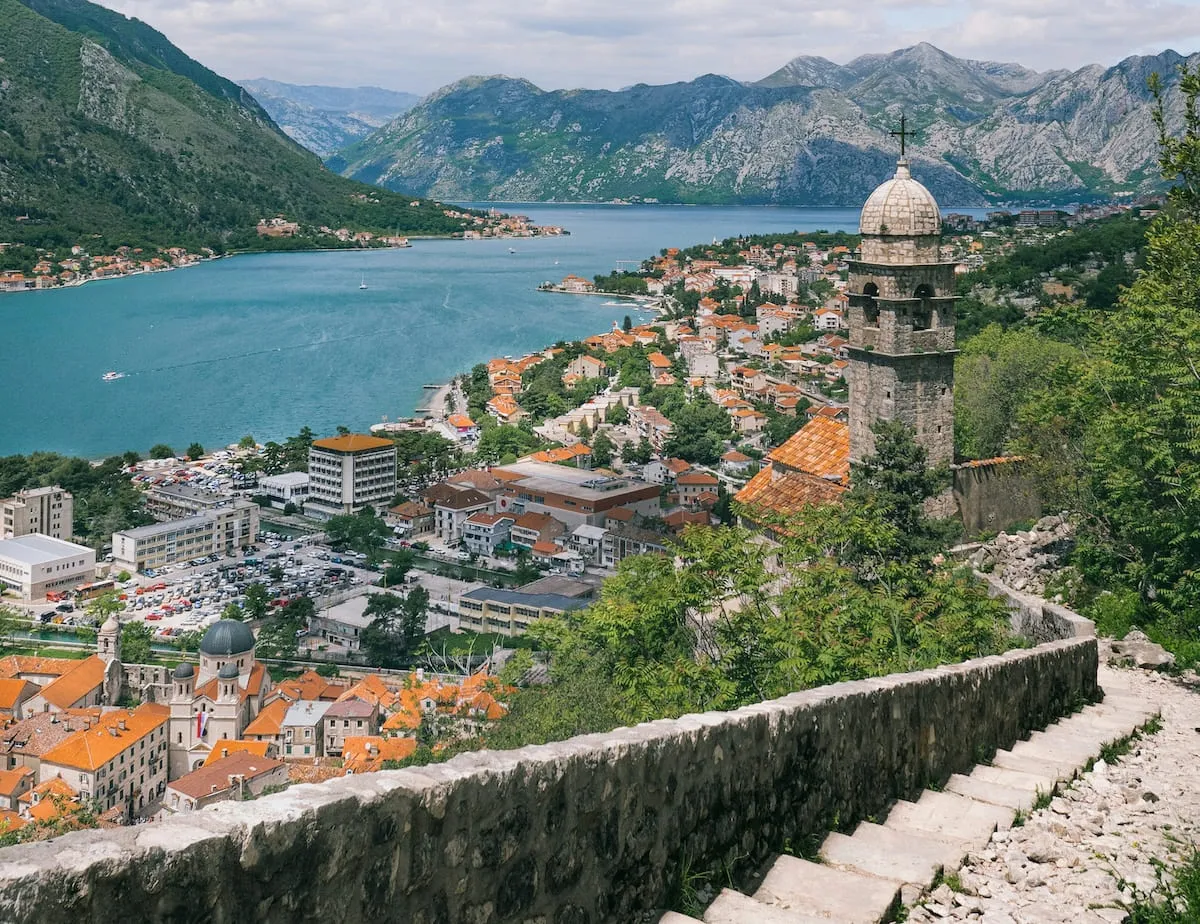
The fortifications encircling the town stretch for 4.5 to 5 km, with walls reaching up to 20 metres in height and 10 to 15 metres in width in places. Their construction spanned several centuries: from the earliest fortifications in the Illyrian period, through the south gate (partly dating from the 9th century), to the main gate built by the Venetians in 1555.
Three gates provide access to the town. The south gate is the oldest. The north gate, in the Renaissance style, dates from the first half of the 16th century. The main gate, or Venetian harbour gate, is the most iconic entrance, a legacy of nearly four centuries of Venetian rule over the city.
Entry to the old town remains completely free: simply walk through one of these gates.
Saint Tryphon’s Cathedral
This is the region’s most important religious monument. Originally built in 1116 and rebuilt in 1166, it stands on the ruins of an older temple dating from the 9th century. Its Romanesque architecture makes it one of the finest examples of this style on the Adriatic coast. It is dedicated to Saint Tryphon, the city’s patron saint.
Right next to it stands Drago Palace, which can only be viewed from the outside but which complements the scenery of this part of the city beautifully.
Other churches not to be missed
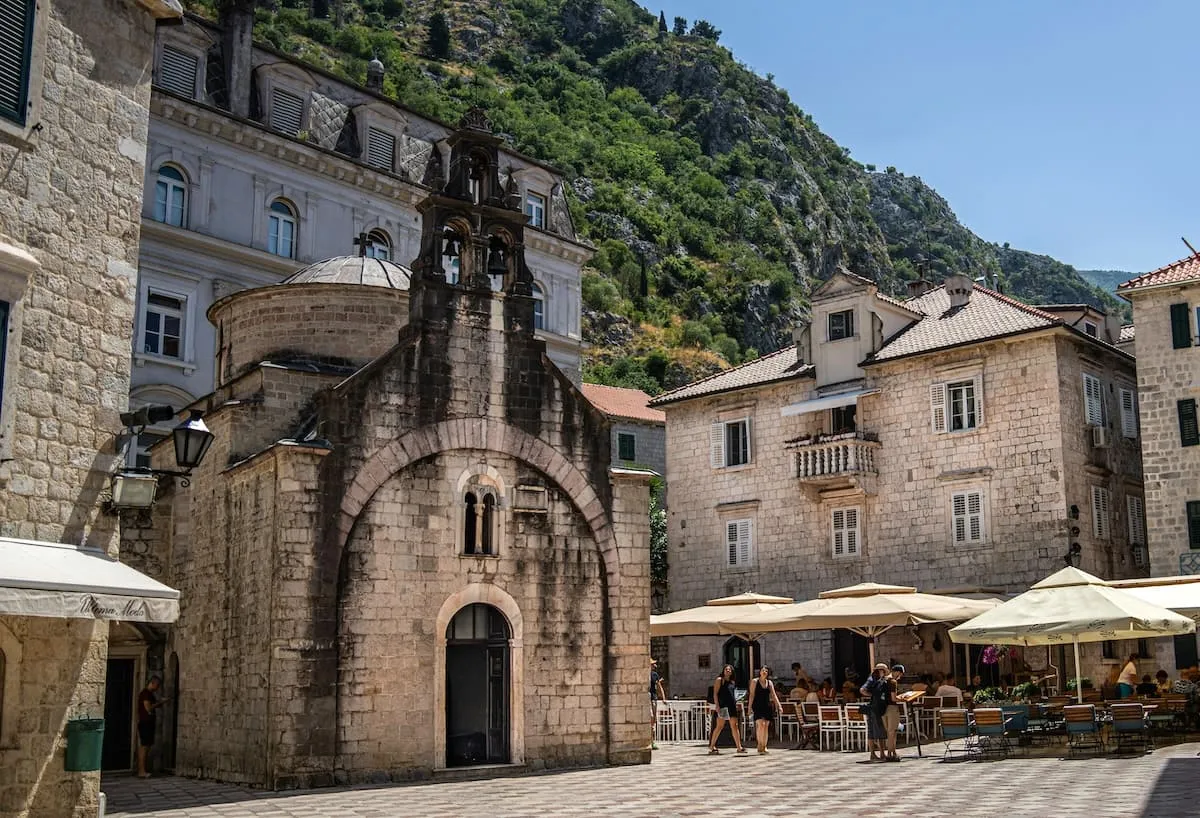
St Luke’s Church, dating from 1195, is well worth a visit for its quintessentially medieval character. The Church of Our Lady of Remedy, built in 1518, remains an active Catholic place of worship, attached to the Diocese of Kotor. Several other small churches dot the narrow streets, adding to the feeling of walking through a town where every corner hides a historical detail.
Notable squares and buildings
Arms Square (Place des Armes) is the city’s largest square, situated just beyond the Venetian harbour gate. Further on, Museum Square is home to Grgurina Palace, which now houses the Maritime Museum of Montenegro, dedicated to the region’s naval history.
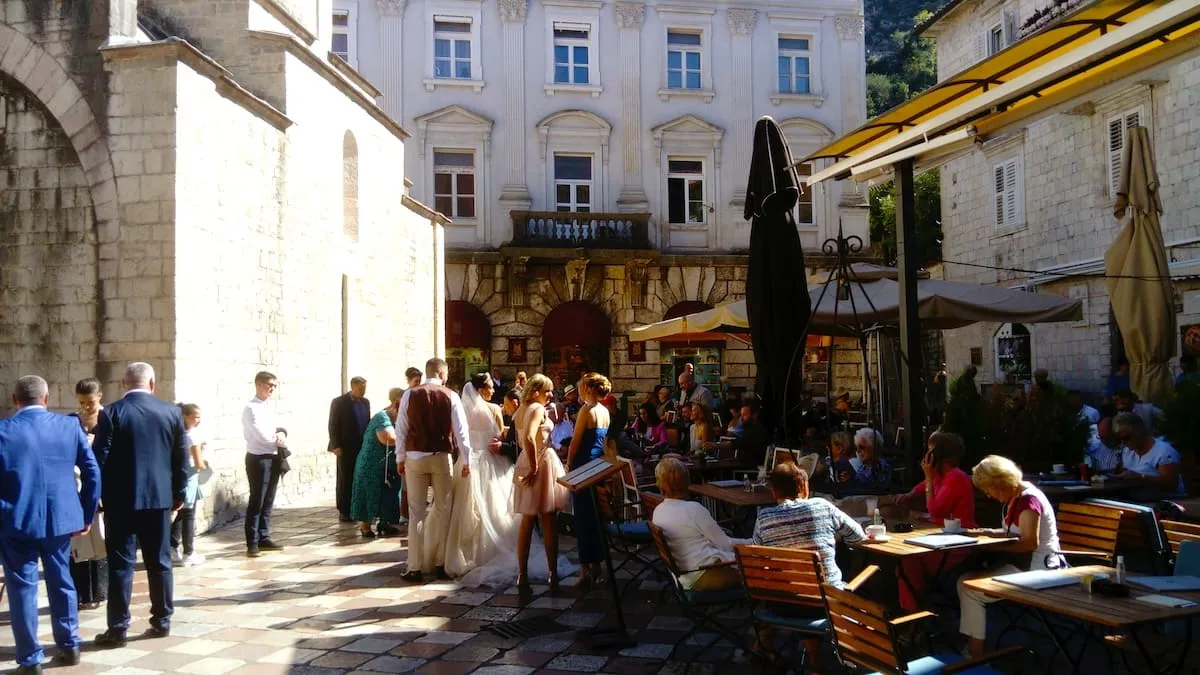
Between the two, tiny squares (trgovi) dot the urban landscape, offering unexpected respites amongst the narrow streets. The palaces of the patrician families, built between the 15th and 18th centuries, such as those of the Beskuca and Bisanti families, bear witness to the city’s former prosperity. The clock tower (Kula Gradskog Sata), near the old citadel, completes this architectural landscape.
The climb to the Fortress of St John
This is the main activity once inside the ramparts: climbing up to the Fortress of St John, which overlooks the town and the bay. There are over 1,300 steps, and the climb takes between 45 minutes and an hour, depending on your pace. Admission costs around €8.
The view from the top is one of the most beautiful in the Balkans, with Kotor Bay stretching out below. It’s best to climb early in the morning or late in the afternoon to avoid the heat, especially in summer.
Exploring without a set route
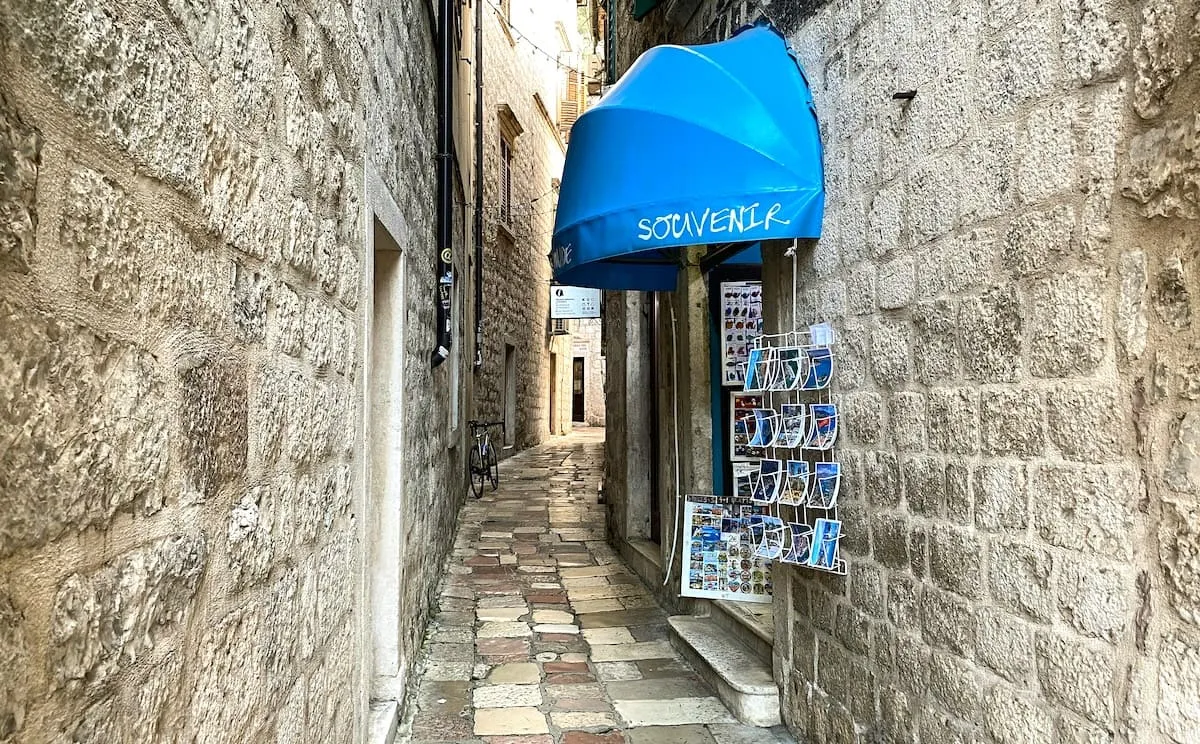
The best way to explore Kotor’s old town is simply to lose yourself in it, without a set itinerary. The cobbled alleyways wind their way between the buildings and lead out onto small squares where cafés and local shops invite you to linger. The cats, numerous and roaming freely, are an integral part of the scenery and the charm of the place.
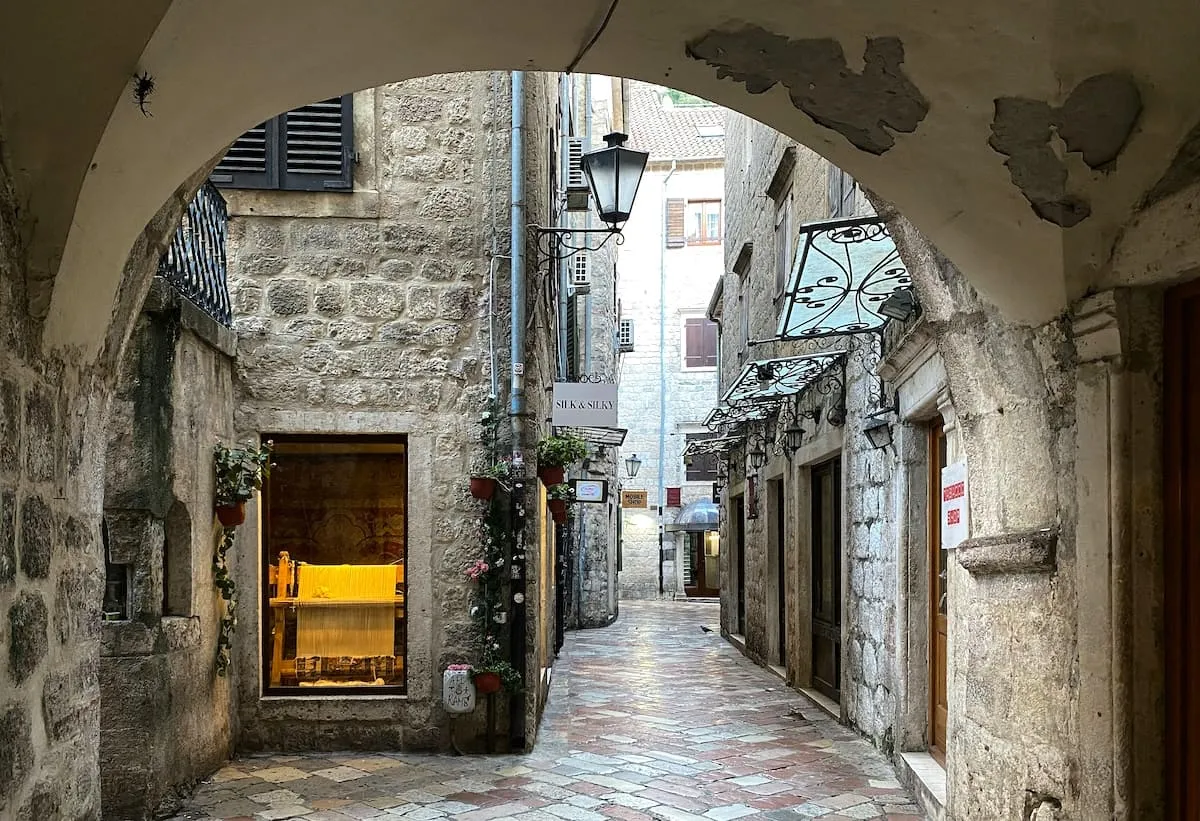
Take the time to explore the neighbourhood thoroughly, without rushing. A meal in a restaurant in the old town is, in fact, one of the unmissable experiences during a visit to Kotor: it’s an opportunity to discover the local cuisine in an authentic setting, right in the heart of its historic streets.
Access to the old town and things to bear in mind
From the cruise port, it’s very easy to reach the old town on foot. By car, however, parking quickly becomes a problem: traffic around the ramparts can be heavy, especially in high season, and there are no car parks within the pedestrian zone itself.
It is also worth noting that the city has recently been designated as a World Heritage Site in Danger, which has drawn increased attention from international organisations to its preservation. Its UNESCO status prevents any new accommodation from being built within the ramparts, though there is no available space there anyway.